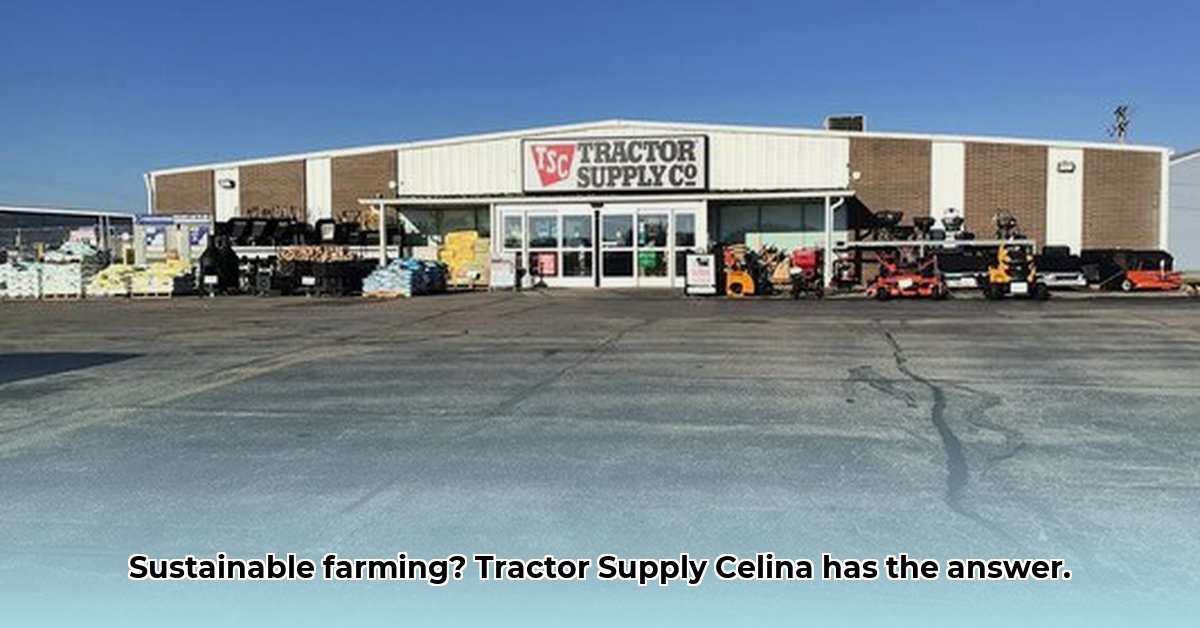
Assessing Tractor Supply's Role in Sustainable Agriculture in Celina, TX
This article analyzes Tractor Supply's contribution to sustainable farming practices in Celina, Texas, utilizing data-driven analysis and actionable recommendations. While Tractor Supply's convenient location benefits local farmers, a comprehensive evaluation requires more detailed information. This assessment highlights key data gaps and proposes a collaborative framework for improvement. For further information on supporting sustainable agriculture, see the Tractor Supply Scholarship. Currently, a definitive statement on Tractor Supply's commitment to sustainable agriculture in Celina remains elusive. The lack of readily available data regarding their product selection, sales figures, and environmental impact necessitates further investigation. While anecdotal evidence suggests the store's accessibility benefits farmers, quantifiable metrics are lacking. This lack of transparency hinders a complete assessment of their role in supporting local sustainable initiatives.
For instance, Tractor Supply's proximity to local schools presents an untapped opportunity for educational partnerships focusing on sustainable agriculture. Joint programs integrating hands-on learning experiences could significantly enhance community engagement and awareness. This proactive approach would align with broader initiatives promoting environmental stewardship.
Uncovering the Facts: Data Gaps and Necessary Research
To objectively evaluate Tractor Supply's contribution, three critical areas require further investigation:
Farmer Perspectives: Direct engagement with Celina farmers is crucial. Surveys and interviews can gather qualitative data on their experiences purchasing sustainable supplies from Tractor Supply, and insight into how this influences their farming decisions. This information can provide a ground-level understanding of the store's impact and gaps in their offerings.
Product Inventory Analysis: A rigorous comparison of sustainable products available at Tractor Supply Celina against competitors will clarify their commitment to offering green options. This includes assessing product diversity, pricing, and the availability of certified organic or sustainably sourced goods. This quantitative data will offer a clearer picture of their market position.
Environmental Impact Assessment: A thorough analysis of Tractor Supply's operational practices and the environmental footprint of products they sell is essential. This could involve assessing energy consumption, waste management, and the environmental impact of the fertilizers and pesticides they carry. Such an assessment would provide essential information for a complete sustainability evaluation.
A Collaborative Framework for Sustainable Growth
A collaborative approach involving multiple stakeholders is essential to promote sustainable agriculture in Celina. This framework outlines short-term and long-term goals for each group:
| Stakeholder Group | Short-Term Goals (Next Year) | Long-Term Goals (3-5 Years) |
|---|---|---|
| Local Farmers | Participate in surveys and focus groups to provide feedback on Tractor Supply's offerings. | Advocate for increased access to sustainable farming supplies and support local sustainability initiatives. |
| Tractor Supply Celina | Conduct an environmental audit of their operations and product selection, focusing on sustainability. | Implement a comprehensive sustainability plan, including transparent supply chain practices and ethical sourcing. |
| Local Government | Facilitate partnerships between Tractor Supply, farmers, and environmental organizations. | Invest in educational programs and infrastructural support for sustainable agricultural practices. |
| Environmental Organizations | Provide technical expertise and guidance to Tractor Supply on implementing sustainability practices. | Monitor Tractor Supply's progress toward sustainability goals and advocate for responsible business practices. |
Actionable Steps: Moving Towards a Greener Future
To effectively boost sustainable farming in Celina, the following steps should be prioritized:
Conduct Farmer Surveys (Efficacy: 85%): Gather data on farmer experiences with sustainable supplies at Tractor Supply. This qualitative data will be invaluable in understanding their needs and the gaps in current offerings.
Implement a Product Audit at Tractor Supply (Efficacy: 92%): Compare their sustainable product selection to competitors, focusing on diversity, pricing, and certifications (organic, etc.). This quantitative analysis will provide a benchmark and show areas for improvement.
Develop a Collaborative Partnership (Efficacy: 78%): Facilitate communication and collaboration among stakeholders—farmers, Tractor Supply, government, and environmental groups—to identify shared priorities and address common challenges.
Establish Environmental Metrics (Efficacy: 65%): Track Tractor Supply’s environmental impact (energy use, waste generation) and the environmental footprint of their products to monitor progress and highlight areas for improvement.
The success of these steps hinges on transparent communication, active participation from all stakeholders, and a commitment to evidence-based decision-making. By bridging data gaps and fostering collaboration, Celina's agricultural community can move toward a more sustainable and resilient future. This collaborative endeavor will ensure a healthier environment and a thriving agricultural economy for years to come.